Finca Cattleya
Environmental project
The CATTLEYA Project consists of the development, implementation and scientific study of a way of life :
- Inspired by traditional knowledge from Ngäbe indigenous local people
- As autonomous and self-sufficient as possible;
- Without human presence having any negative impact on the local ecosystem
in such a way as to constitute scientifically validated model of sustainable co-existence of humans in a natural ecosystem.
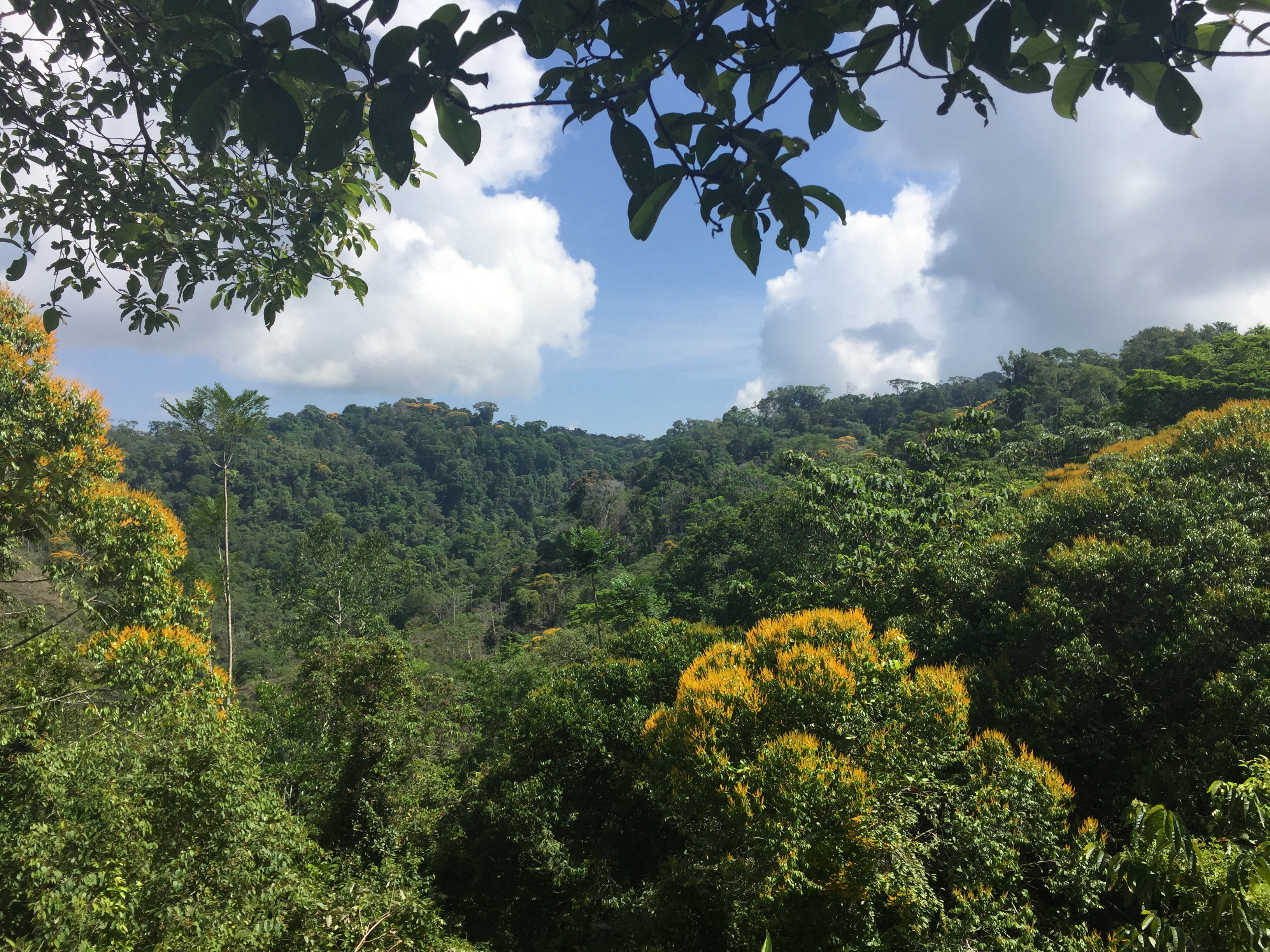
The local ecosystem is a tropical rainforest and is mostly composed of primary forest. It also encompasses small patches of secondary forest and mangroves.
Three local families are currently settled at the Finca. They live and take care of the land in a way that is rooted in traditional lifestyles of indigenous people who lived in Corcovado National Park until 1975, and with whom we are in close collaboration.
An agroecological plantation stretches over 4 ha, without the use of any chemicals.
- Fertilizers are natural and home-made, from papaya seeds and fish bones;
- Vermicompost is produced and looked after according to a local recipe;
- Mulching and soil cover protect crops against pests and regulate soil moisture.
The plantation has been thought and designed as a conservatory, providing a vast collection of local edible plants with an emphasis on forgotten varieties.
A very special and unique point is that varieties that are inedible to humans are grown as well, with the intention to feed wild animals travelling across the ecological corridor. Indeed, the elaboration of a new model of harmless and virtuous coexistence is at the core of the Cattleya project, and it must therefore sustain all the components of the local ecosystem.
Permaculture also includes:
- Medicinal plants;
- Flowers for birds and insects;
- Vanilla (local hybrid variety).
Thus, the plantation eventually aims to:
- Ensure food autonomy for the three families living and working at the Finca;
- Contribute to the diet of wild animals living or journeying through the corridor;
- Provide health care through medicinal plants grown according to the teachings of local indigenous people;
- Secure the financial autonomy of the project (vanilla).
The primary forest will be studied and scientifically monitored:
- To prove the total absence of human impact on the functioning of the ecosystem and its biodiversity;
- To collect seeds (by a local NGO) from plants that are threatened with extinction. These are used for ecological restoration in sensitive areas of the country where forest is being regenerated, or in new wildlife corridors.
The secondary forest, which consists in this case of an island surrounded by primary forest, has spontaneously started transitioning from secondary to primary forest, thanks to the crossing of animals that bring:
- Pollen in their fur
- Grains and seeds in their excrement
The spontaneous nature of this process is quite exceptional and will be scientifically studied as well. Indeed, it relies on a fragile balance between the health status of the surrounding primary forest and on the animals that cross the corridor.
We work to preserve and improve these two factors through different actions, including:
- The propagation of seedlings of wild sapodilla trees (which are considered as a universal source of food for migratory animals);
- The creation of bat shelters in dead tree trunks;
- The installation of epiphytic fig trees in the canopy for passing monkeys, which are the main forest pollinators.
Multiplier effect:
Once studied and scientifically validated, the model developed in this pilot project will be propagated and taught in Cattleya in the form of seminars and practical trainings:
- For locals. The local population is indeed very interested in biodiversity conservation but lacks both a proper ecological education and is not aware about the lack of human impact on the local ecosystem. This provides hope for a great local environmental impact.
- For scientists. The Cattleya project aims to provide a template for new models of sustainable coexistence for humans within natural ecosystems, starting here with tropical rainforests.
Economic and social impact
The training cycles offered at Cattleya will allow participants to then apply at their premises the method and techniques taught and thus ultimately without any impact on the local ecosystem:
- help each household move towards food self-sufficiency
- double household income (<vanilla)
This economic aspect is all the more important since the average per capita income is low in this region (+/- $300 per month) and the price of food is very high.